
The Complete 2026 Guide on How to Remove a YouTube Video
Table of Contents
- Introduction
- Understanding YouTube’s Removal Ecosystem
- Can You Legally Remove a YouTube Video You Don’t Own?
- Top Reasons Why People Request YouTube Video Removal
- Detailed Methods to Remove a YouTube Video
- Step-by-Step Workflow of a YouTube Video Removal Service
- How Long Does Removal Take?
- DIY Removal vs Hiring Professionals
- Cost of YouTube Video Removal in 2026
- Case Studies / Examples
- Conclusion
Nowadays, the internet is accessible to everyone, so uploading content online within seconds has become very easy. Every coin has a good and bad side; the world of the internet has it too. While this has helped people share their content and express their views, the downside is that some misuse it to create harmful or misleading video content and upload it to YouTube. Many individuals and businesses are now facing issues when some unwanted content appears online without their consent. This situation can cause damage to reputation, invade privacy, or spread of false information. As a result, YouTube video removal has become an important step for protecting digital identity.
YouTube, being one of the leading and world’s largest platforms, any video posted here can reach millions of people. So, when a person needs to remove YouTube videos that they do not own, this process can get a bit difficult, as the terms & conditions of YouTube are quite extensive and intricate, and also the platform reviews every request carefully. So, someone who knows this process and how the system works can help resolve the situation faster.
In today’s era, brands and business entrepreneurs are very curious about learning the essentials of how to manage their online presence. Timely YouTube video removal protects reputation and prevents further damage. This guide explains the complete 2026 process to help readers understand how to act when a video affects them, their business, or their clients.
Understanding YouTube’s Removal Ecosystem
YouTube complies with specific legal restrictions and community standards. These guidelines determine which videos can be removed from the internet. YouTube videos that engage in violence, incite hate, harass people, slander people, infringe on copyrights, doxx anyone, impersonate anyone, etc. violate the community guidelines and is prohibited on the platform. YouTube guidelines also remove videos that violate owner intellectual property. If someone wants to remove certain videos from YouTube, the first thing to understand are the guidelines.
There are several paths available for YouTube video removal. These include copyright complaints, privacy requests, defamation reports, trademark claims, and harassment complaints. Every mechanism has a different requirement, and YouTube checks each report carefully before acting. This helps prevent misuse of the system while still giving people a way to protect themselves.
Sometimes, individuals find the process difficult, especially when they need to take action quickly or when the video appears on multiple channels. This is where YouTube content removal services become helpful. These services help users to sort through the right policy and organize documents that are needed according to each stage of the policy. YouTube video removal service raises the chances of successfully taking down the video. Enterprises and public figures can protect themselves and prevent the spread of harmful narratives by responding quickly with professional help.
Can You Legally Remove A YouTube Video You Don’t Own
When the content is capable of detracting someone’s good reputation or when the matter used in a video is taken without their consent, copyright laws are quite concrete. These protections make it possible to file complaints against violations of such provisions. A YouTube team will thoroughly review the request; if it is within legal limits and their judgment holds that this video violates copyright law, they may remove that video content from the world.
If a video exposes someone’s private information without consent, the platform considers it a privacy violation. Defamatory videos that spread false statements can also qualify for removal. Copyright issues are another strong ground. If someone uses your original video, audio, image, or written material without approval, you are allowed to request its removal.
There are times when submitting a report becomes complex. In such cases, individuals and brands use a YouTube legal removal service to ensure the complaint is complete and accurate. This can be especially useful when trying to remove defamatory YouTube video posts that spread quickly. YouTube approves the removal only when the complaint fits its rules and legal requirements, so approaching the process correctly matters.
Top Reasons Why People Request YouTube Video Removal
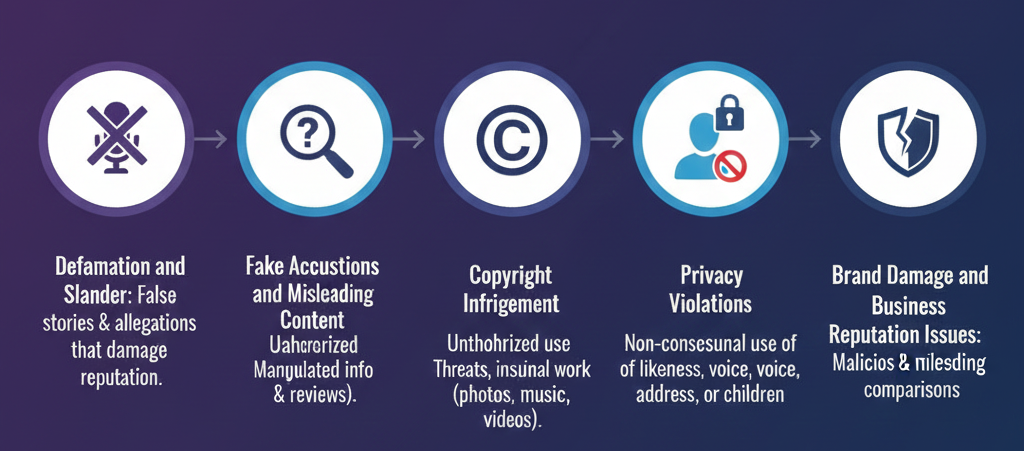
Below are the most common reasons why YouTube video removal requests increase.
Defamation and Slander: The ultimate reason that makes many people request to remove YouTube videos is because of defamation; for example, when a video contains serious allegations and false stories that can seriously damage someone’s reputation, it may also clearly draw negative attention to him/her, resulting in harm that lasts longer than one might imagine. Viewers of these videos are often led to form biased and negative opinions of individuals or corporations.
Fake Accusations and Misleading Content: These days, posting a fake review or spreading misleading claims is easy for competitors looking to influence public opinion and damage the reputation of anyone they want. These videos circulate and confuse the audience, which can result in negative consequences for businesses in terms of trust and money.
Copyright Infringement: Copyright issues occur when someone uploads your original work without permission. This could include your photos, music, graphics, or full videos. YouTube takes this seriously and provides a structured process known as a YouTube copyright takedown. Since copyright law is clear about ownership, these requests often lead to successful YouTube video removal.
Harassment, Bullying, and Abuse: Attacks on a person’s character and the incitement of others to harass individuals fall within the scope of YouTube’s misconduct. Examples of such attacks include threats, insults, directed attacks of abuse, and continuous harassment. Such conduct adversely affects individuals’ mental and emotional stability and general safety. Reporting such conduct minimizes the risks to an individual’s safety and/or mental and emotional well-being and ensures that the appropriate actions are taken to confront the misconduct denoted.
Privacy Violations: Privacy-related issues are another major reason for YouTube content removal services to step in. If a video shows someone without their consent, uses their voice, displays their address, or includes children, it can be flagged. YouTube reviews these requests under its privacy rules. In many cases, a YouTube privacy complaint removal request is approved when the content clearly reveals personal information.
Brand Damage and Business Reputation Issues: Businesses often face misleading comparison videos or malicious reviews designed to harm their reputation. These videos can influence customer decisions and reduce trust in the brand. When false or manipulated information is involved, companies request to remove videos damaging reputation to protect their image and maintain credibility.
Detailed Methods to Remove a YouTube Video
A distinct approach can be taken to request the removal of a YouTube video depending upon the circumstances involved. Discussed below are the five most common and most effective techniques.
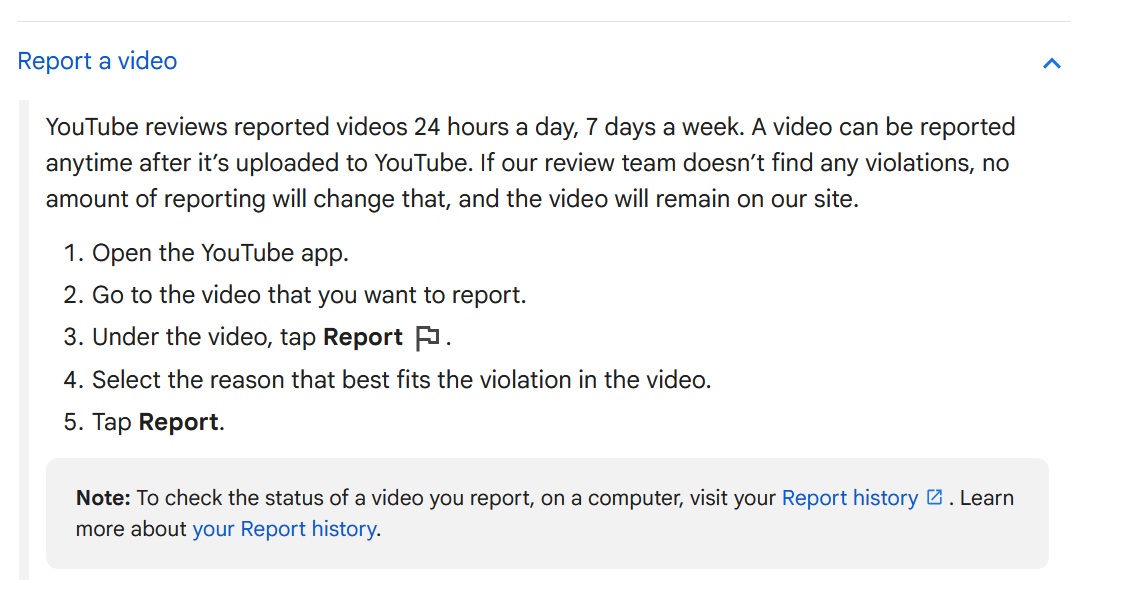
Reporting a Policy Violation: The most straightforward approach to remove YouTube videos is YouTube’s inbuilt function to ‘Report’ videos. This permits users the right to flag videos which transgress YouTube’s community guidelines. This is done by choosing a specific reason for the complaint and submitting clear details that describe the issue. Many reports fail because users do not provide enough explanation or select the wrong category. For example, reporting a defamatory video under “spam” will not lead to action. When the complaint fits YouTube’s policies and contains specific proof, this method succeeds. It is effective for harassment, hateful content, scams, and videos that promote harmful actions.
Filing a Privacy Complaint: A privacy complaint is used when a video reveals personal information without consent. This can include showing someone’s face, using their voice, revealing their home address, or featuring children without permission. YouTube requires strong evidence in these cases. The requester must clearly appear in the video and must explain how the content violates privacy. Approved cases usually involve non-consensual appearances, vulnerable individuals, or sensitive personal details. While this method is powerful, it requires patience because YouTube often asks for additional information before deciding. Still, it remains one of the most reliable steps for privacy-related YouTube video removal.
Copyright / DMCA Takedown: A copyright complaint is used when someone uploads your original work without permission. The formal process is known as the DMCA (Digital Millennium Copyright Act). It allows creators to protect their images, music, videos, artwork, and written content.Not every video qualifies. To submit a DMCA claim, a complainant must be the original owner, or wholly possess the rights to, the material in question. Because misuse of DMCA can have legal consequences, accuracy must be kept in mind. YouTube is one of the quickest, most efficient ways to obtain a DMCA takedown, so it is very important to submit the claim correctly. YouTube is a platform that houses a myriad of videos that infringe on the posting owner’s content without authorization.
Legal Removal (Defamation Notices, Cease and Desist): Some situations require legal action, especially when videos cause serious harm to reputation. Notices of Defamation and Cease and Desist letters are tools of the legal trade. These documents delineate why something is untrue, damaging, and illegal. Upon receipt of such documents, YouTube must and is supposed to give such complaints more attention.Removal of content is legally justified when video content communicates unsubstantiated assertions, targets the individual for vilification, and/or results in the incurrence of significant harm. Lawyers approach YouTube with clear evidence, detailed documentation, and legal citations. This increases the chance of getting the content removed.
Professional YouTube Video Removal Services: Many individuals and brands turn to YouTube content removal services when they need expert help. These professionals understand every removal category and know how to frame complaints correctly. They prepare strong cases, gather supporting evidence, and choose the most effective method for each situation. Experts often secure faster responses because they avoid common mistakes. Their experience leads to higher approval rates, especially for complex cases like defamation, reputation harm, and privacy issues. For companies or public figures, professional support can save time and protect online presence more effectively.
Step-By-Step Workflow of a YouTube Video Removal Service
Many individuals and businesses choose to work with YouTube content removal services when dealing with complex cases. These professional YouTube removal services utilize a refined comprehensive approach to maximize successful outcomes.
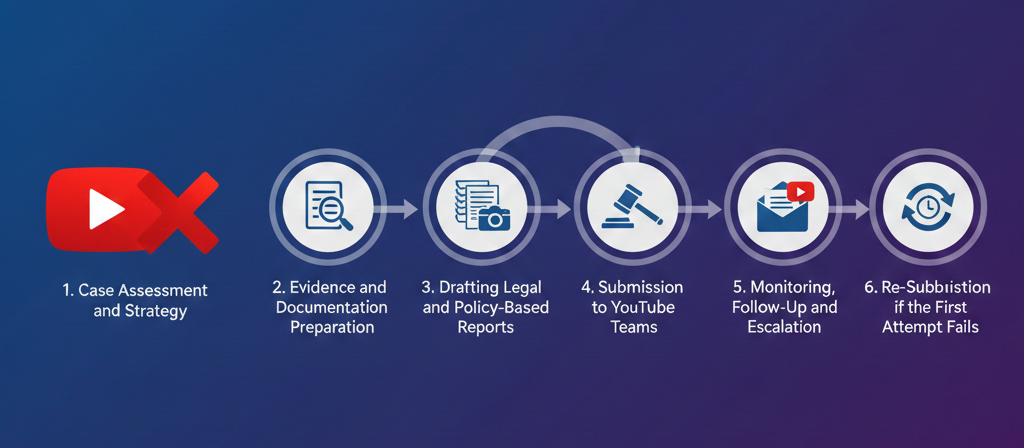
The following is an outline depicting how an expert YouTube removal service works end to end.
Case Assessment and Strategy: The first step is a complete review of the video and the issue involved. Experts identify which removal path gives the highest chance of success. The strategy may include policy reporting, privacy complaints, copyright action, or legal notices. Choosing the right route saves time and ensures the complaint fits YouTube’s rules.
Evidence and Documentation Preparation: Strong evidence increases approval rates. Professionals gather screenshots, timestamps, legal documents, identity proof, or ownership proof, depending on the case. This helps YouTube understand why the video violates guidelines or harms the requester. Well-prepared documentation often leads to faster outcomes.
Drafting Legal and Policy-Based Reports: Once the evidence is ready, specialists create reports that follow YouTube’s policy language. If the case involves defamation, privacy violations, or copyright misuse, the report must clearly explain the harm or rights violation. This step is important because unclear or incomplete reports are a common reason for rejected removal requests.
Submission to YouTube Teams: The next step is submitting the complaint through the correct YouTube channel. Each removal type uses a different form. A privacy case goes to the privacy team, while a copyright issue reaches the DMCA team. A well-structured submission helps YouTube understand the complaint quickly and take action.
Monitoring, Follow-Up and Escalation: After submission, experts track the request until a decision is made. They respond to YouTube’s additional questions or evidence requests. If needed, they escalate the case through additional support channels. This follow-up process is important for timely YouTube video removal.
Re-Submission if the First Attempt Fails: Sometimes the first request is declined due to incomplete details or misunderstanding. A professional YouTube takedown service reviews the reason for rejection, improves the documentation, and submits the case again with stronger arguments. Many videos get removed in the second or third attempt when the issue is presented correctly.
How Long Does Removal Take
The removal of YouTube videos depends on the type of complaint and the response time from YouTube. Most instances land within a general minimum and maximum time frame.
For simple policy violations, removal can happen in as little as a day or two, however the more complex cases, including Privacy and Defamation, may take three to seven days to be removed. YouTube takes these cases a bit more cautiously. Even more complex are the cases that take violation of Copyright, as these can take as much as two weeks if both parties involved on either side need to take their time and explain their cases.
There are a number of factors, including the weight of the evidence, how thoroughly the removal request was defined, and how complex the whole thing is, that affect approval time. Other factors that can play into the time frame are just how many policies were broken, and if the case involves children, possible safety abuses, or high sensitivity material – these usually speed things along.
Experts working with YouTube content removal services often speed up the process because they know how to frame reports correctly and provide all necessary proof in the first attempt. Their structured approach helps reduce delays and improves the chance of successful YouTube video removal.
DIY Removal Vs Hiring Professionals
Pros and Cons of Doing It Yourself: Removing a video on your own is possible, and many people try the DIY route first. The benefit is that it is completely free. Anyone can submit a request using the reporting option. However, if someone has no experience with YouTube’s policies, they might find it difficult. Reports can get denied due to ambiguous wording and the selection of inaccurate categories. DIY attempts can be quite time-consuming as YouTube tends to request more details, prolonging the case.The biggest drawback of DIY removal is the high rejection risk. If the complaint does not match YouTube’s guidelines, the platform will decline it even if the video is harmful. This is why many individuals and companies shift to professional help after their first attempt fails.
Benefits of Hiring Professionals: Professional teams that handle YouTube brand protection service requests bring accuracy and experience. They understand how YouTube reviews cases, knowing how to submit evidence and how to do the paperwork correctly. They are really good at wording, especially on things like defamation and invasion of privacy.Professional also have access to advanced escalation channels that normal users do not. This helps when a case needs urgent attention or when a harmful video is spreading quickly. For businesses and public figures, expert guidance reduces risk and improves the chances of successful YouTube video removal.
Cost Of YouTube Video Removal In 2026
The price for YouTube content removal services varies depending on the complexity of the case. Simple policy violations cost less, while legal-based removals require more time and specialized work. Below are the general pricing range offered by various agencies:
- Basic removal cases: $999 – $2500
- Advanced reputation protection packages: $3000 to $5000
Premium services charge more because they handle legal drafting, evidence preparation, escalation, and follow-up. The pricing depends on Legal complexity, number of videos involved, type of violation, submission routes required and time sensitivity.
Case Studies and Examples
These examples are inspired by real cases documented online:
Garcia v. Google, Inc: Garica was an actress in the controversial film, Innocents of Muslims. Garcia, the actress in the film, alleged the project was deception and sought to compel Google to take down the film from Youtube. A 9th Circuit Court initially ordered Google to take the video down, however, after a Google appeal, the full 9th Circuit Court overturned the take down order and ruled Garcia had no legitimate stand to file in order to invoke a removal of the video.
Why it matters: The case shows that even when a takedown is granted at first, it can be overturned on appeal, especially when free speech and platform protections are involved.
Source: https://en.wikipedia.org/wiki/Garcia_v._Google,_Inc.
Viacom International, Inc. v. YouTube, Inc: It was a major copyright case in the U.S. where Viacom accused YouTube of allowing large amounts of its TV shows and movies to be uploaded without permission.Viacom claimed that more than 150,000 unauthorized clips were available on YouTube. The case went on for several years and was eventually settled in 2014.
Why it matters: The case highlights how copyright owners can use U.S. courts to pressure platforms into removing infringing content or taking stronger responsibility for what users upload.
Source: https://en.wikipedia.org/wiki/Viacom_International,_Inc._v._YouTube,_Inc.
Conclusion:
Although anyone can post on the internet, including on YouTube, there can be issues with postings that can harm your reputation or business. People understanding YouTube’s policy about taking videos down can help in evaluating a situation in reputation management. Whether an issue involves a breach of privacy, video content copyright, or defamatory statements against other parties, immediate action on our part is paramount
While many users rely on professionals when the situation is urgent or delicate, some users prefer the do-it-yourself method. Professional teams increase the approval rates for YouTube content removal services by creating stronger reports and adhering to the right procedures. Knowing the proper procedures will enable you to act swiftly and confidently if you ever need to remove YouTube videos that are detrimental to you or your brand. Protecting your online presence in today’s digital world has become very crucial for people to trust you.